

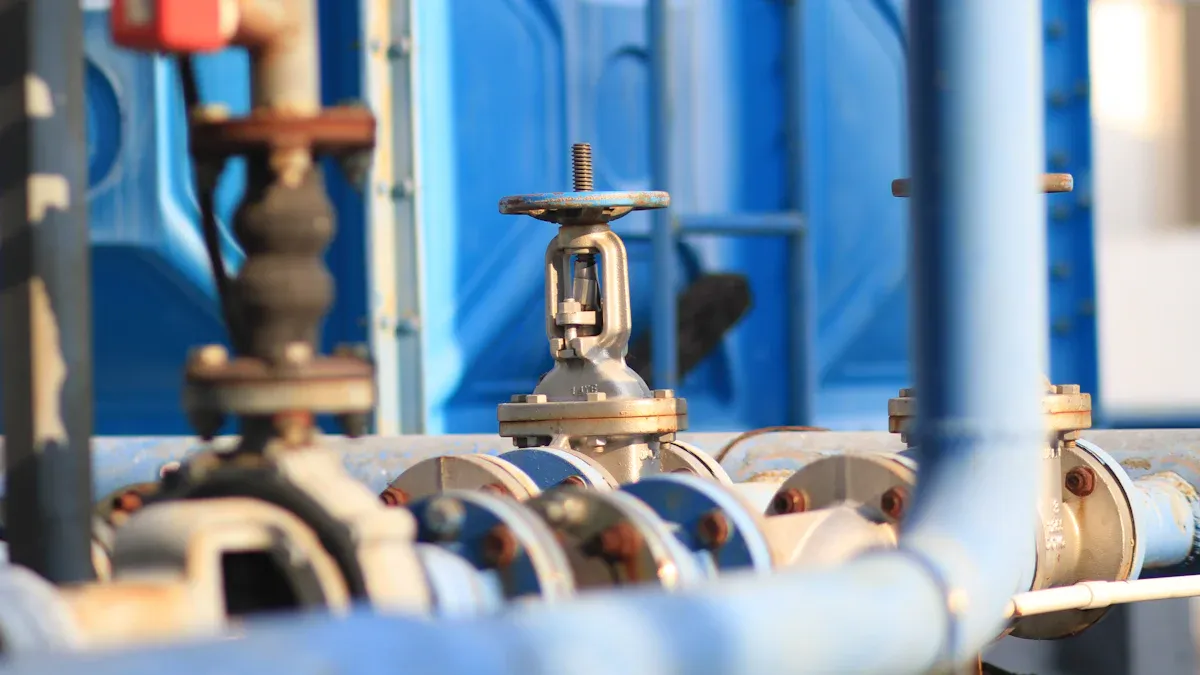
A globe valve 1/2 inch to 24 inch lets you control the flow of liquids or gases. You can find globe valve 1/2 inch to 24 inch in industries such as oil and gas, water treatment, and power plants. Globe valve 1/2 inch to 24 inch is available in a wide range of sizes, making it important to choose the right size for your system. If you select the wrong globe valve 1/2 inch to 24 inch, your system’s performance may drop by up to 20%. More industries are now using globe valve 1/2 inch to 24 inch, which is driving growth in the globe valve market.
-
The globe valve 1/2 inch to 24 inch market will continue to expand for years to come.
-
Choosing the correct globe valve 1/2 inch to 24 inch prevents flow issues and keeps your operations running smoothly.
Key Takeaways
-
Globe valves help control how liquids and gases move. They are very important in places like oil, gas, and water treatment plants. Picking the right size globe valve, from 1/2 inch to 24 inch, is very important. If you pick the wrong size, your system may not work well. It can make the system work up to 20% worse. Globe valves let you control flow better than gate valves. This makes them great when you need to make small changes. You should check globe valves every six months. This helps make sure they work right and do not leak. Always use a globe valve with the right pressure class for your system. This keeps things safe and helps everything work well.
What is a globe valve?
Globe valve basics
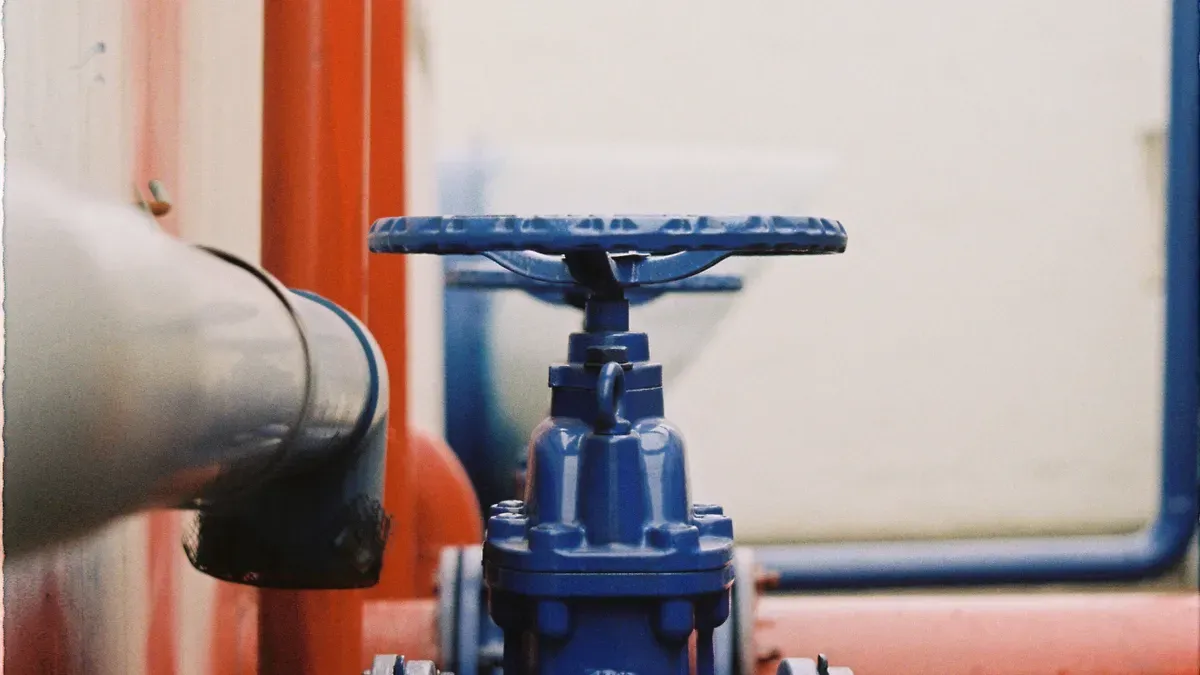
A globe valve helps you control how much liquid or gas moves in a pipe. The valve is called a globe valve because its body is round. Globe valves are used in many places. They let you start, stop, or change the flow very accurately. Big engineering standards like API 600, API 598, ANSI B16.34, and ISO 5208 tell us how globe valves should work and how to test them. Here is a quick look at these standards:
|
Standard |
Description |
|---|---|
|
API 600 |
Sets rules for how globe valves shut off. |
|
API 598 |
Explains how to check and test globe valves. |
|
ANSI B16.34 |
Covers how globe valves are made and their pressure limits. |
|
ISO 5208 |
Focuses on checking leaks in globe valves with special seals. |
Key features
Globe valves are special because they have a strong seal and a unique shape. The body, bonnet, plug, and stem all help control the flow. The table below shows the main parts and what they do in a globe valve:
|
Component |
Description |
|---|---|
|
Body |
Holds the parts inside and handles fluid pressure. |
|
Bonnet |
Seals the body and stops leaks from getting out. |
|
Plug |
Goes up and down to open or close the flow. |
|
Stem |
Connects the handle or motor to the plug. |
|
Materials |
Includes stainless steel, cast iron, carbon steel, and special alloys. |
Globe valves give you better control of flow than gate or ball valves. The table below shows how globe valves and gate valves are different:
|
Feature |
Globe Valves |
Gate Valves |
|---|---|---|
|
Performance |
Good for changing flow |
Best for fully open or closed |
|
Structure |
Complex, changes flow direction |
Simple, straight flow |
|
Sealing surfaces |
Strong seal |
Weaker seal |
|
Application |
Works with high pressure and heat |
Good for low pressure drop |
Common uses
Globe valves are used in lots of places because they are good at controlling flow. Here are some common uses:
-
Water treatment plants use globe valves to control flow and pressure.
-
Chemical factories use them to handle acids, steam, and other fluids.
-
Oil and gas companies use globe valves in pipes and refineries.
-
Power plants use them for steam and cooling water.
-
Food and drink factories use globe valves for liquids and steam.
Tip: Pick globe valves when you need to control flow and pressure exactly in your system.
How globe valves work
Flow control mechanism
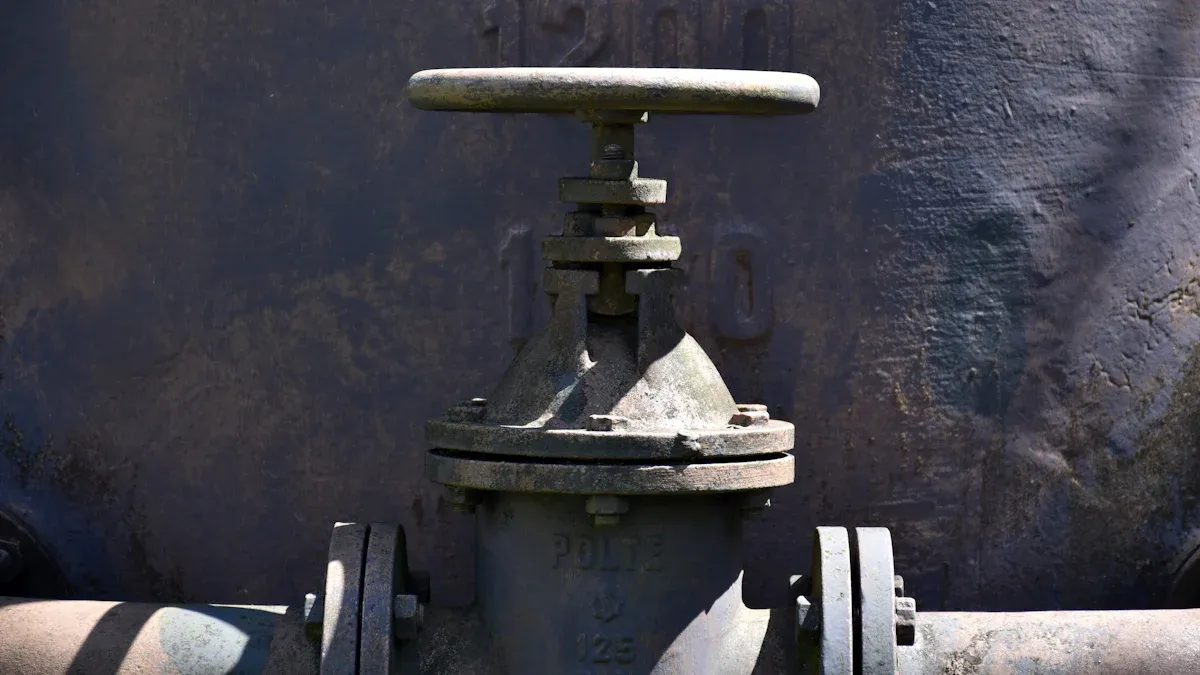
Globe valves help you control flow very well. Their design is not like other valves. The fluid goes through a Z-shaped path inside the valve. This means the fluid changes direction two times. The Z-shape helps you control the flow better. Inside, there is a disc that moves up and down. When the disc moves, it lets more or less fluid pass. The disc moves in the same way as the fluid. This makes the valve work well and last longer.
Here is how globe valves control flow:
-
The disc goes straight up and down. This lets you change the flow very exactly.
-
The Z-shaped path makes the fluid turn. This helps you control the flow closely.
-
The stem lifts the disc. The opening gets bigger or smaller in a steady way. This means the more you open the valve, the more fluid can go through.
-
The disc and fluid move together. This keeps the parts safe and makes the valve strong.
-
You can use globe valves in many systems. They are good when you need to control flow carefully.
Note: Globe valves are best for controlling flow in water, steam, and chemical systems.
Advantages and limitations
Globe valves have many good points, but they also have some limits. The table below shows one main advantage and one main limit of globe valves:
|
Advantage |
Limitation |
|---|---|
|
Ability to throttle or modulate flow |
Significant head loss created |
You can control how much fluid moves in your pipes very well. This makes globe valves great for jobs that need careful flow control. But globe valves make the fluid slow down more. This means you lose some pressure as the fluid moves through.
Tip: Pick globe valves if you need to change flow exactly. But remember, they can make pressure drop in your system.
Globe valve 1/2 inch to 24 inch sizes
Size range overview
You can find globe valves in many sizes. Globe valve 1/2 inch to 24 inch covers almost every need, from small pipes to huge industrial systems. Most globe valves start at 1/2 inch and go up to 24 inch, but some manufacturers offer even smaller or larger sizes. The standard sizes range from 1/4 inch to 2 inch. Large globe valves can reach up to 36 inch, but globe valve 1/2 inch to 24 inch is the most common range.
Here is a simple list of available sizes:
-
Standard sizes: 1/4", 1/2", 3/4", 1", 1 1/4", 1 1/2", 2"
-
Medium sizes: 2 1/2", 3", 4", 6", 8"
-
Large sizes: 10", 12", 14", 16", 18", 20", 24"
-
Extra-large sizes: 30", 36" (less common)
Tip: You should check the size of your pipe before picking a globe valve. The right size keeps your system safe and efficient.
Standard and large sizes
Globe valve 1/2 inch to 24 inch fits many jobs. Standard globe valves (1/4"–2") work best for small systems, like home plumbing or small machines. Large globe valves (10"–36") handle big flows in factories and plants. You can use globe valves in water treatment, oil and gas, power plants, and chemical factories.
Manufacturers list globe valve sizes and class ratings. Here is a table showing how globe valves match size and class:
|
Valve Type |
Class Rating |
Size Range |
|---|---|---|
|
Globe |
150# |
2" to 24" |
|
Globe |
300# |
2" to 24" |
|
Globe |
600# |
2" to 12" |
|
Globe |
800# |
1/2" to 2" |
|
Globe - Pressure Seal |
900# |
1/2" to 12" |
|
Globe - Pressure Seal |
1500# |
1/2" to 12" |
|
Globe - Pressure Seal |
2500# |
2" to 4" |
|
Globe - Cryogenic |
150# |
2" to 16" |
|
Globe - Cryogenic |
300# |
2" to 16" |
|
Globe - Cryogenic |
600# |
2" to 16" |
You can see that globe valve 1/2 inch to 24 inch covers most needs. Standard globe valves cost less and need less maintenance. Large globe valves cost more and need special care.
|
Valve Type |
Size Range |
Cost Range |
|---|---|---|
|
Standard Globe Valve |
¼”–2” |
$50–$500 |
|
|
10”–36” |
$1,000–$10,000+ |
|
Y-Type Globe Valve |
Same sizes |
15–30% more than standard valves |
Note: Large globe valves are heavier and harder to install. You may need special tools and extra workers.
Pressure classes and weights
Globe valve 1/2 inch to 24 inch comes in many pressure classes. You can pick globe valves with ANSI 125 or ANSI 250 ratings. These ratings show how much pressure the globe valve can handle. Globe valves also come in higher classes, like 600, 900, 1500, and even 2500. The material and pressure class change the weight of the globe valve. Higher pressure classes use thicker metal and weigh more.
Here is a table showing common pressure classes, materials, and temperature ranges:
|
Pressure Class |
Material Type |
Temperature Range (°C) |
|---|---|---|
|
150 |
Carbon Steel (WCB) |
-29 to 270 |
|
300 |
Carbon Steel (WCB) |
Up to 454 |
|
600 |
Carbon Steel, Alloys |
Varies |
|
900 |
Carbon Steel, Alloys |
Varies |
|
1500 |
Carbon Steel, Alloys |
Varies |
|
2500 |
Carbon Steel, Alloys |
Varies |
|
4500 |
Carbon Steel, Alloys |
Varies |
|
125 |
Grey Cast Iron |
Varies |
|
250 |
Grey Cast Iron |
Varies |
|
800 |
Forged Steel |
Varies |
The weight of globe valves changes with size and pressure class. Small globe valves are light and easy to move. Large globe valves can weigh hundreds of pounds. You must check the weight before installing a globe valve 1/2 inch to 24 inch.
Tip: Always match the pressure class to your system’s needs. This keeps your globe valve safe and working well.
Typical applications by size
Globe valve 1/2 inch to 24 inch fits many jobs. You can use globe valves in homes, factories, and power plants. Small globe valves (1/2"–2") control flow in small pipes. Medium globe valves (2 1/2"–6") work in commercial buildings. Large globe valves (8"–16") handle big flows in factories. Extra-large globe valves (18"–24") manage huge flows in power plants and water systems.
Here is a table showing globe valve sizes and their common uses:
|
Size Category |
Applications |
|---|---|
|
Small (1/2" – 2") |
Precise flow control in smaller systems with moderate pressure requirements. |
|
Medium (2 1/2" – 6") |
Moderate flow rates and control in plumbing and heating systems in commercial buildings. |
|
Large (8" – 16") |
Higher flow rates and complex control in industrial settings. |
|
Extra-large (18" – 24") |
High-capacity systems requiring robust flow control for large-scale operations. |
You can use globe valves in these industries:
-
Water and Wastewater Management: Regulate flow and pressure in pipes.
-
HVAC Systems: Control hot or cold water in heating and cooling.
-
Chemical and Petrochemical: Manage chemicals in factories.
-
Steam Services: Control steam in power plants.
-
Oil & Gas: Regulate fluid flow and manage pressure surges.
-
Power Plants: Control feedwater and steam for turbines.
-
Chemical Processing: Dose chemicals and manage cooling loops.
Globe valve 1/2 inch to 24 inch gives you many choices. You can pick the right globe valve for your system. The American Society of Mechanical Engineers (ASME) and ANSI set standards for globe valves. These standards make sure globe valves work well in high-pressure jobs. Manufacturers use standards like BS 1873, ANSI B16.10, and ASME B16.34 to design globe valves. You can trust globe valve 1/2 inch to 24 inch to meet your needs.
Note: Globe valves help you control flow and pressure in many industries. You can find the right size for your job.
Choosing the right globe valve size
Application matching
You must pick the right globe valve for your system. This keeps everything safe and working well. First, look at how fast the fluid moves and how much pressure drops in your pipes. If you choose a globe valve that is too large or too small, problems can happen. The valve might shake or even break. Always check your pipe size. Make sure the globe valve fits the pipe. It should be close in size, usually just one size different.
The place where you use the globe valve matters too. If your system gets very hot or uses strong chemicals, you need special materials. For example, if your fluid has bits in it or is very hot, pick globe valves made from strong alloys or stainless steel. The right material helps your globe valve last longer and stops leaks.
Here are important things to think about when picking a globe valve:
-
How fast the fluid moves and how much pressure drops
-
If the globe valve size matches your pipe size
-
If the material works with your fluid and temperature
-
What type of globe valve you need (standard or Y-pattern)
-
If you want to open the valve by hand or with a machine
-
How well the globe valve stops leaks
-
If the ends of the globe valve fit your pipes
-
If the globe valve meets rules like API and ANSI
Tip: Always check the pressure and temperature ratings. Follow rules like API 600, API 602, and ASME B16.34 to stay safe.
Selection tips
Picking the right size globe valve helps you avoid big problems. If you get the wrong size, your system may not work well. You could lose time and money. The table below shows what can go wrong if you do not pick the right size:
|
Consequence |
Description |
|---|---|
|
Operational Inefficiencies |
The valve may shake and get damaged. |
|
Production Loss |
You might have to stop and restart your work. |
|
Increased Labor Costs |
Workers will spend more time fixing problems. |
|
Additional Expenses |
You may pay more for shipping and new parts. |
|
Higher End Product Costs |
Products that cannot be returned cost more in the end. |
To pick the best globe valve, follow these steps:
-
Figure out the flow coefficient (Cv) using your flow and pressure drop.
-
Make sure the globe valve works best when it is open between 40% and 70%.
-
If the globe valve is the same size as your pipe, check your math again.
-
Sometimes, pick a globe valve one size smaller than your pipe for better control.
-
Check all rules and papers before you buy.
Note: Picking the right globe valve keeps your system safe and saves money. Always check your numbers and make sure the globe valve meets industry rules.
When picking globe valves, make sure the size fits your pipe. Always check how fast the fluid moves in your system. Pick the right connection type for your globe valve. If you choose the correct size, your system stays safe. This also helps you avoid expensive repairs later. Globe valves let you control flow and pressure easily. Use the advice in this guide to pick globe valves without worry. Globe valves work well for many different jobs.
For extra help, look at tools and guides from trusted valve makers.
FAQ
What does a globe valve do?
A globe valve lets you control how much liquid or gas moves through a pipe. You can start, stop, or adjust the flow easily.
How do you choose the right globe valve size?
You should match the valve size to your pipe size. Check the flow rate and pressure. Use manufacturer charts to help you pick the best size.
Can you use globe valves for steam?
Yes, you can use globe valves for steam. They work well in steam systems because they handle high temperatures and give you good flow control.
What is the difference between globe and gate valves?
|
Globe Valve |
Gate Valve |
|---|---|
|
Good for flow control |
Best for on/off flow |
|
Strong seal |
Simple design |
|
More pressure drop |
Less pressure drop |
How often should you maintain a globe valve?
You should check globe valves every six months. Clean and inspect them for leaks or damage. Regular maintenance keeps your system safe.
