

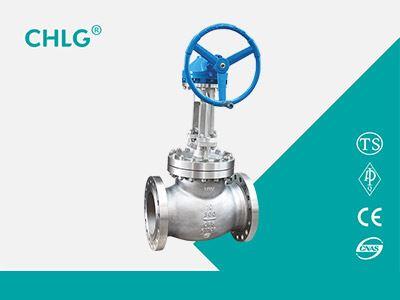
You have to pick the correct globe valve for your job. Your choice affects safety and how well things work. The Class 800 900 1500 globe valve works with many pressures and temperatures. You should think about exact flow control, if the material fits, and stopping leaks. These things help your system stay safe and work well. LIANGGU VALVE uses expert skills for every globe valve answer.
-
Exact flow rate control keeps your equipment safe.
-
Material that matches stops problems.
-
A tight shutoff lowers leak risks.
Key Takeaways
-
Pick the right globe valve class for your system’s pressure and temperature. This helps keep things safe and working well. - Choose materials that work with your fluid type. This stops rust and makes the valve last longer. - Pick the right end connection type for your pipes. This makes sure the valve fits well and does not leak. - Think about the flow control features of the valve. This helps your system work its best. - Always check that the valve meets industry safety and reliability standards.
Class 800 900 1500 globe valve comparison
Pressure and temperature ratings
You need to know how much pressure and heat each valve can handle. The Class 800 900 1500 globe valve covers a wide range. Here is a quick summary:
-
Class 800 globe valve: Maximum working pressure is 1973 psig at temperatures from -29°C to 38°C.
-
Class 900 globe valve: Maximum working pressure is 2220 psig for WCB cast carbon steel.
-
Class 1500 globe valve: Maximum working pressure is higher, designed for severe service.
These ratings help you choose the right valve for your system. LIANGGU VALVE globe valves meet international standards like API 600 and GB/T 12235. You get reliable performance in tough conditions.
Materials and construction
You want strong materials for safety and long life. LIANGGU VALVE uses quality metals like WCB, WCC, LCB, CF8, CF8M, and WC6. The Class 800 900 1500 globe valve comes with trims such as 13Cr, SS304, SS316, and Stellite. You can select body designs like T-pattern, Y-pattern, or angle pattern. These options help you match the valve to your application. The construction supports high pressure and temperature.
Sizes and dimensions
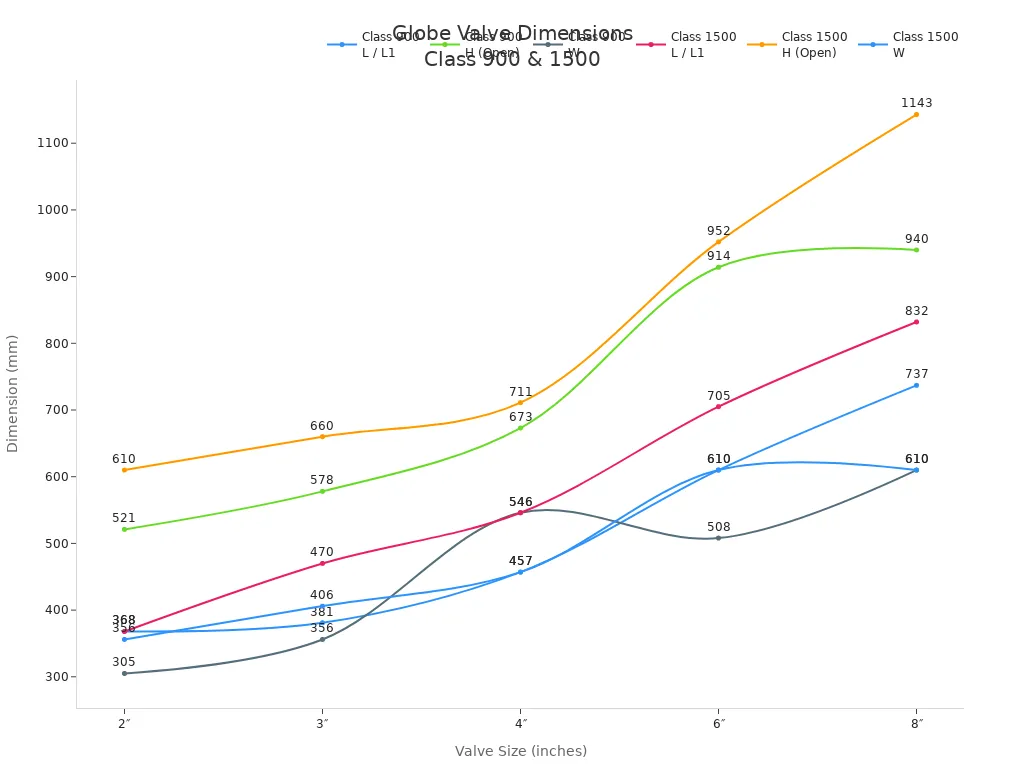
Valve size affects flow and installation. You can see the typical sizes and dimensions for Class 900 and 1500 globe valves in the table below:
|
Class |
Sizes |
L / L1 (mm) |
H (Open) (mm) |
W (mm) |
|---|---|---|---|---|
|
900 |
2″ |
368 |
521 |
305 |
|
900 |
3″ |
381 |
578 |
356 |
|
900 |
4″ |
457 |
673 |
546 |
|
900 |
6″ |
610 |
914 |
508 |
|
900 |
8″ |
737 |
940 |
610 |
|
1500 |
2″ |
368 |
610 |
356 |
|
1500 |
3″ |
470 |
660 |
406 |
|
1500 |
4″ |
546 |
711 |
457 |
|
1500 |
6″ |
705 |
952 |
610 |
|
1500 |
8″ |
832 |
1143 |
610 |
You can also compare the face-to-face dimensions for Class 900 globe valves:
|
Class |
Size (NPS) |
Face to Face Dimension (inches) |
|---|---|---|
|
900 |
2" |
14-1/2 |
|
900 |
3" |
15 |
|
900 |
4" |
18 |
|
900 |
6" |
24 |
|
900 |
8" |
29 |
End connections and standards
You must check how the valve connects to your pipes. The Class 800 900 1500 globe valve offers flanged, butt weld, socket weld, and threaded ends. You get choices that fit your project. LIANGGU VALVE globe valves follow standards like API 600, DIN, JIS, and Russian GOST. You can trust the valves to meet global requirements.
Tip: Always match the valve class and connection to your system pressure and pipe size. This keeps your operation safe and efficient.
LIANGGU VALVE globe valve specifications
Class 800 globe valve specs
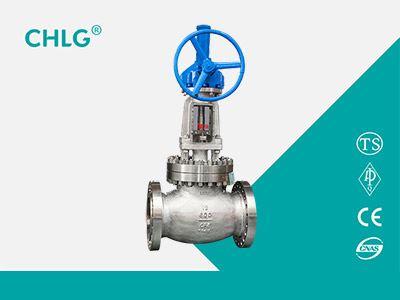
You can use the Class 800 globe valve in medium-pressure systems. This valve works with a maximum pressure of 1973 psig. It handles temperatures from -29°C to 38°C. You get good performance in hot and cold places. The body materials are WCB, WCC, LCB, CF8, and CF8M. You can pick trims like 13Cr, SS304, SS316, and Stellite. These trims help the valve last longer.
The Class 800 globe valve follows standards like API 600, GB/T 12235, and BS 1873. You can choose socket weld, threaded, or butt weld ends. These choices help you fit the valve to your pipes. The valve is small, so it fits in tight spots.
Note: You can ask for a bellows seal if you need zero leakage. This is important for toxic or dangerous media.
Key features:
-
Precise flow control helps with important processes.
-
High-quality materials make the valve last longer.
-
Many connection types give you flexible installation.
-
The valve meets global standards.
Class 900 globe valve specs
You can trust the Class 900 globe valve for higher pressure jobs. This valve works at a maximum pressure of 2220 psig for WCB cast carbon steel. You can use it in systems from -29°C to 425°C. The body materials are WCB, WC6, CF8, and CF8M. You can pick trims like 13Cr, SS316, and Stellite. These trims make the valve stronger.
The Class 900 globe valve meets standards like API 600, DIN 3356, and JIS B2071. You can choose flanged, butt weld, or socket weld ends. The valve comes in T-pattern, Y-pattern, and angle pattern designs. These designs help lower pressure drop and fit your system.
Key features:
-
Strong construction works for high-pressure service.
-
Wide temperature range lets you use it in many places.
-
Different body patterns fit different flow needs.
-
You can use manual, electric, or pneumatic actuation.
Tip: You can use this valve for steam, oil, and chemical lines. Safety and reliability are important.
Class 1500 globe valve specs
You should pick the Class 1500 globe valve for tough jobs. This valve handles very high pressures. It is good for hard industrial systems. The maximum pressure is up to 3705 psig, depending on material and temperature. You can use it from -29°C to 425°C.
The valve body uses strong materials like WCB, WC9, CF8M, and LCB. You can pick trims like SS316, Stellite, or Monel. These trims help stop corrosion. The Class 1500 globe valve follows strict standards like API 600, GB/T 12235, and ISO 5208. You can choose flanged or butt weld ends for safe connections.
Key features:
-
Great pressure and temperature resistance.
-
Advanced sealing options stop leaks.
-
Custom designs work for special media like oxygen or ammonia.
-
The valve meets international testing and quality standards.
You can ask for special documents, inspection reports, and certificates for your project.
Why choose LIANGGU VALVE for Class 800 900 1500 globe valve solutions?
-
You get valves with precise flow control and strong durability.
-
You can use them for many types of media, including toxic and cryogenic fluids.
-
You receive products that meet global standards.
-
You can customize valves for your project.
You can count on LIANGGU VALVE for safe, efficient, and long-lasting globe valve solutions.
Key differences and selection guide
Application and performance
You have to pick the right valve class for your job. Each class works for a certain pressure and temperature. Class 800 globe valves are good for medium pressure. You can use them with steam, water, or oil. Class 900 globe valves handle higher pressure and more heat. They work in power plants, chemical plants, and oil refineries. Class 1500 globe valves are for very tough jobs. They are used for high-pressure steam, gas, or dangerous fluids.
You should check if the valve meets industry standards. These rules help you pick a safe and strong valve. Look at the table below to see some common standards and what they mean:
|
Standard |
Description |
|---|---|
|
API 600 |
Sets body wall thickness and sealing surface hardness for high-pressure oil and gas jobs. |
|
ASME B16.34 |
Defines pressure-temperature ratings for globe valves. |
|
ISO 5208 |
Classifies leakage levels for industrial use. |
|
GB/T 12235 |
Specifies materials and test methods for forged steel globe valves. |
|
JB/T 7746 |
Applies to ultra-high-pressure globe valves and guides material selection. |
If you follow these standards, your valve will work well. LIANGGU VALVE globe valves meet these global rules, so you can trust them.
How to choose the right class
Think about what your system needs before you choose a globe valve. First, check what kind of fluid you have. Is it a liquid, a gas, or something that can cause rust? This helps you pick the right material. Next, look at the pressure and temperature. Make sure the valve can handle your system. You should also figure out the flow coefficient (Cv). If you pick a valve that is too big, it can be hard to control the flow.
Pick the end connection that fits your pipes. You can choose flanged, butt-weld, socket-weld, or threaded ends. Pick the body and trim materials that match your fluid. For example, use stainless steel for fluids that can cause rust. Decide if you want to open the valve by hand or use a machine. Make sure the actuator is the right size for your job.
Tip: Always check the standards for your project. Standards like ASME B16.34 and API 600 help you pick the right valve class.
Here is a table to help you avoid mistakes:
|
Factor |
What to Determine |
|---|---|
|
Fluid & service |
Find out if your fluid is a liquid or gas, and if it is clean or can cause rust. |
|
Pressure & temperature |
Make sure the valve can handle your system. |
|
Flow coefficient (Cv) |
Figure out Cv so you do not pick a valve that is too big. |
|
End connections |
Choose the right way to connect the valve to your pipes. |
|
Body material |
Pick the best material for your fluid. |
|
Trim material |
Pick trims that stop leaks and last longer. |
|
Actuation |
Decide if you want to open the valve by hand or with a machine. |
Practical tips for selection
You can use these steps to help you choose:
-
Make sure the valve material works with your fluid. This stops rust.
-
Check if the valve can handle your system’s heat and pressure.
-
Pick the right end connection for your pipes.
-
Choose trim materials that fit your needs.
-
Decide if you want to open the valve by hand or with a machine.
LIANGGU VALVE lets you change the valve for special jobs. You can get a valve for special fluids, high pressure, or special flow needs. You can ask for special sizes, materials, or seals. You can also get help with papers, tests, and certificates.
Note: If you need something special, LIANGGU VALVE can help you design and build a globe valve for your project.
You get expert help and many choices. You can trust LIANGGU VALVE to help you pick the right valve and keep your system safe.
You now understand the big differences between Class 800, 900, and 1500 globe valves. Here is a simple checklist you can use fast:
-
Look at the pressure and temperature ratings.
-
Make sure the materials work with your fluid.
-
Choose the end connection that fits your pipes.
-
Check if the valve meets the right standards.
Lianggu Valve is known for being high quality and reliable. Let’s see how it matches up:
|
Feature |
Lianggu Valve |
Competitors (General) |
|---|---|---|
|
Production Capacity |
1.5 million units |
Usually less |
|
Defect Rate |
Under 0.3% |
Often more |
|
Product Range |
Over 70 series, 300 types |
Usually fewer |
|
Major Clients |
PetroChina, Sinopec |
Changes |
|
Export Markets |
40% worldwide |
Usually less global |
You can count on Lianggu Valve for expert help and good solutions.
FAQ
What information do you need to quote a globe valve?
You must give the size and pressure class. Tell the material and connection type. Say what fluid will go through the valve. Share the temperature and how many valves you need. Explain how you want to operate the valve. List the standard you want. Tell if you need any tests or certificates.
Can you customize globe valves for special projects?
You can ask for special sizes or materials. You can pick different sealing structures and connections. You can choose the actuator you want. You may request inspection papers and packing. LIANGGU VALVE helps with special needs for unique jobs.
How do you test globe valves before shipment?
Valves are checked for shell pressure and seat sealing. They are also checked for how they look and their size. You can ask for more tests like NDT or material checks. You can also ask for calibration.
What happens if you choose the wrong globe valve?
You might get leaks or bad flow. Your system could stop working. Always check your fluid, pressure, temperature, and standards before choosing.
