


A floating ball valve lets you control liquid or gas flow in pipes. It has a hollow body, inlet and outlet ports, a round ball, a stem, and a lever. The ball turns 90 degrees for fast use. The fluid pushes the ball to the seat for a tight seal. Knowing how this works is important for factories. LIANGGU VALVE makes strong floating ball valves for many businesses.
-
A floating ball valve is a quarter-turn valve. It lets you open and close it quickly.
-
The floating ball design lets the ball move a little. This helps the valve seal well when closed.
Key Takeaways
-
A floating ball valve lets you control liquid or gas fast. You only need to turn it a quarter way to open or close it. The ball shape helps make a strong seal. This makes it work well in oil, gas, and water treatment jobs. Pick the best materials for your valve so it lasts longer. The right materials also help it work with different fluids. You should check your valve every 3 to 6 months. This helps stop leaks and keeps it working well. Think about how much pressure and heat your system has. This helps you pick the best floating ball valve for your needs.
Floating Ball Valve Basics

What Is a Floating Ball Valve
A floating ball valve helps you control liquid or gas in pipes. Inside, there is a round ball that can move a little bit. The ball has a hole in the middle. When you turn the handle, the ball spins. If the hole matches the pipe, fluid goes through. If you turn the ball so the hole does not match, the flow stops.
The name comes from the way the ball "floats" between two soft seats. The ball is not held tightly in one spot. Fluid pressure pushes the ball against the seat on one side. This makes a tight seal. This design works well for many jobs in factories. You can use it in oil and gas pipes, chemical plants, water treatment, and power plants.
LIANGGU VALVE has many floating ball valves. Their products work well in lots of industries.
How It Works
The floating ball mechanism uses a hollow ball that moves inside the valve. When you turn the handle, the ball turns a quarter turn. This lets you open or close the valve fast. When open, the hole in the ball lines up with the pipe. Fluid can flow through easily. When closed, the ball blocks the pipe. Fluid pressure pushes the ball against the seat. This keeps the seal tight and stops leaks.
You see floating ball valves in many places because they are simple to use and fix. People use them in oil and gas pipes, chemical plants, water systems, power plants, and food factories.
Floating ball valves work best when pressure and flow are not too high. The ball moves a little to help seal, but it needs fluid pressure to seal well. For higher pressure, you might pick a trunnion-mounted ball valve. That kind has extra support for the ball and works better for tough jobs.
If you choose a floating ball valve from LIANGGU VALVE, you get a valve that works smoothly and seals well. Their valves help you run your system safely and easily.
Components & Design

Main Parts
A floating ball valve has many important parts. Each part does a special job. The table below lists the main parts and what they do:
|
Component |
Function |
|---|---|
|
Valve Body |
This is the main case of the valve. It is made from strong metals like stainless steel or carbon steel. |
|
Ball |
The ball controls how fluid moves. It is usually made from stainless steel or brass to last longer. |
|
Seats |
These help seal the ball. They are made from PTFE or elastomers to keep the seal tight. |
|
Stem |
The stem links the actuator to the ball. It moves the ball to open or close the valve. |
|
Seals and Packing |
These stop leaks around the stem. They are made from elastomers or PTFE-based materials. |
|
Actuator |
The actuator lets you open or close the valve. It can be manual or automatic. |
Tip: The way the seats are made helps the valve seal tightly and stops leaks.
Sealing Mechanism
The seal depends on how the ball and seats work together. When you close the valve, fluid pressure pushes the ball to the seat. This makes a seal on both sides and stops leaks. The floating ball can move a little, so the seal stays strong even when pressure is high. The valve can block flow from either side.
-
Fluid pressure pushes the ball into the seat for a tight seal.
-
The seat design keeps the valve closed well.
-
The seats work for both low and high pressure.
Note: For very hot jobs, metal seats or stronger PTFE are used for more strength.
Materials & Standards
You can pick from many materials for the valve body, ball, and seats. The right material helps the valve last longer and work better.
-
Valve bodies can be made from stainless steel, carbon steel, brass, bronze, aluminum, nickel alloys, titanium, or plastics.
-
Balls can be made from metal, ceramic, or plastic.
-
Seats can be soft like PTFE, PEEK, Nylon, or metal for tough jobs.
International rules help make floating ball valves safe and strong:
-
API rules are for pipelines and fire safety.
-
ISO rules help with global use and actuator mounting.
-
ASME rules set limits for pressure and temperature.
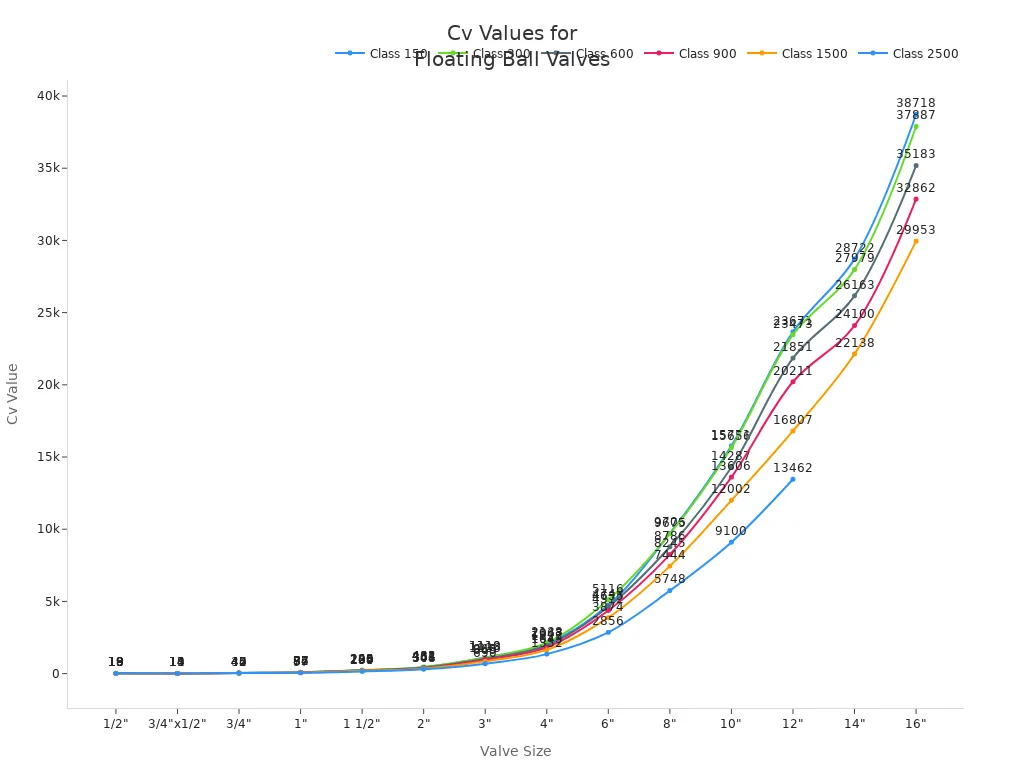
You can look at the chart below to see flow rates for different valve sizes. This helps you choose the best valve for your needs.
Features of LIANGGU VALVE Ball Valves
Key Advantages
You get many benefits when you choose a floating ball valve from LIANGGU VALVE. The design gives you a simple way to control flow. You can pick from one-piece floating ball valves, two-piece floating ball valves, or three-piece floating ball valves. Each type fits different needs. The one-piece floating ball valves have a compact body. You can use them when you want easy installation and less space. The two-piece floating ball valves give you better access for cleaning. The three-piece floating ball valves let you remove the center part for fast maintenance.
You can trust the valve to work well in many jobs. The design uses strong materials like stainless steel and alloy steel. This helps the valve last longer. The seal stays tight even after many uses. You get reliable sealing functions in every model. The valve meets global standards like API, ISO, and ASME. This means you can use it in many countries and industries.
Tip: You can choose the right material for your valve. This helps the valve resist wear and work well with different fluids.
Performance & Reliability
You want a valve that works every time. LIANGGU VALVE floating ball valve models give you smooth operation and a long service life. The thrust bearing inside the valve reduces friction. This makes it easy for you to turn the handle. The anti-static function keeps you safe by stopping static electricity. The self-lubricating parts help the valve last longer. You will notice minimal fluid resistance, even in three-piece floating ball valves.
Here is a table that shows how these valves perform:
|
Feature |
Description |
|---|---|
|
Wear-resistant |
The valve core uses alloy steel, so it does not wear out fast. |
|
Good sealing performance |
The valve core and ring are ground by hand for a strong seal. |
|
Light switch operation |
A spring helps you open and close the valve with little force. |
|
Long service life |
Many industries use these valves because they last a long time. |
-
The valve stem moves in a way that keeps the seal strong.
-
You get a valve that blocks leaks and keeps your system safe.
-
The three-piece floating ball valves make repairs easy, so you save time.
You can count on LIANGGU VALVE for a floating ball valve that gives you top performance and reliability.
Applications & Uses
Typical Industries
Floating ball valves are used in many industries. These valves help control how liquids move in pipes. Oil and gas companies use them to manage liquid and gas flow. Chemical plants use them to keep dangerous fluids safe. Water treatment plants use them for clean and dirty water. Power plants need these valves to keep things running safely. Food and drink factories use them to move different liquids during making food.
Here is a table that shows where floating ball valves are used:
|
Industry |
Common Use |
|---|---|
|
Oil & Gas |
Regulating flow of liquids and gases |
|
Chemical Processing |
Keeping fluids safe and contained |
|
Water Treatment |
Managing water flow |
|
Power Generation |
Controlling system liquids |
|
Food & Beverage |
Handling production liquids |
Tip: These valves are good when you need a tight seal and fast use.
When to Choose a Floating Ball Valve
Pick a floating ball valve when you need to control liquid or gas flow with a strong seal. This valve works well when pressure is not too high and you want easy repairs. The simple design helps you fix it quickly. The small size lets it fit in tight spots.
Many people choose floating ball valves instead of gate valves for some reasons:
-
Simple design makes fixing easier.
-
You can use them with many fluids.
-
Good sealing helps stop leaks.
-
They cost less to keep working.
-
Fewer parts make repairs simple.
Think about a few things before picking a valve for oil and gas:
-
Check the pressure, temperature, and fluid type.
-
Make sure the size fits your pipe and flow.
-
Pick the right materials for the body and seats.
-
The connection type must fit your pipe setup.
-
Decide if you want to open the valve by hand or with a machine.
-
Make sure the valve meets industry rules.
You get a strong seal, tough build, and small size. These things make floating ball valves a smart pick for many jobs. You can control flow and keep your system safe and working well.
Selection Tips
Choosing the Right Valve
You have to pick the best valve for your system. First, check how much pressure your pipes can handle. Next, look at the temperature your pipes reach. Find out what kind of fluid will go through the valve. Make sure the valve size matches your pipe size. The connection must fit your setup. Pick materials that do not rust and last a long time. Stainless steel works for many jobs. For strong chemicals, you may need special alloys.
Here is a simple checklist to help you pick a floating ball valve for high-pressure jobs:
-
Check the pressure, temperature, and fluid in your system.
-
Match the valve size and connection to your pipes.
-
Pick materials that do not rust and fit your needs.
-
Make sure the valve can handle the highest pressure and heat.
-
Look for valves that seal well to stop leaks.
-
Decide if you want to open the valve by hand or by machine.
-
Choose a company that people trust.
-
Think about the cost and how long the valve will last.
Tip: Always check the valve’s safety labels and rules. This helps you follow safety laws and control flow well.
Factors to Consider
You need to think about a few things before you choose. The way your system works is very important. Write down the pressure, temperature, and fluid type. This helps you pick a valve that works well. The material you pick is also important. Stainless steel does not rust and lasts long. Brass is strong and costs less. For very strong chemicals, you may need special alloys like Hastelloy or Inconel.
The seal is important too. Pick a valve that seals well, especially for dangerous fluids. You want a valve that lasts and keeps your flow safe.
You also need to think about safety. Make sure your valve meets rules like API, ANSI, or ISO. This keeps your system and the environment safe. In water plants, pick materials that match the fluid. Make sure the valve can handle the flow without problems.
For the best results, install the valve the right way. Line up and support the pipes so they do not bend. Do not make the bolts too tight or the valve could break. Check the valve often and change the seats when needed.
Note: Picking the right valve and installing it well helps you control flow and keeps your system working right.
You learned how a floating ball valve works and why it matters for your system. You can trust LIANGGU VALVE for strong products and expert help.
-
Think about your needs before you choose a valve.
-
Ask LIANGGU VALVE for advice or custom solutions.
For more details, visit the official website or contact the team for support.
FAQ
What is the main difference between a floating ball valve and a trunnion-mounted ball valve?
You see a floating ball valve with a ball that moves slightly to seal. A trunnion-mounted ball valve uses extra support for the ball. This helps when you need to control higher pressure.
Can you use a floating ball valve for both liquids and gases?
Yes, you can use a floating ball valve for liquids and gases. The design gives you a tight seal. You get reliable performance in water, oil, gas, and many other fluids.
How do you know which material to choose for your floating ball valve?
Tip: Match the valve material to your fluid and temperature. Stainless steel works for most jobs. For strong chemicals, pick special alloys. Ask LIANGGU VALVE for advice if you are not sure.
How often should you check or maintain your floating ball valve?
|
Valve Use |
Check Frequency |
|---|---|
|
Normal Service |
Every 6 months |
|
Heavy Duty |
Every 3 months |
You should inspect the valve regularly. Look for leaks and wear. Replace seats and seals as needed.
